Since July 1, 2025, Ho Chi Minh City has gotten a lot bigger. The government merged three provinces together: the original Ho Chi Minh City, the industrial hub of Binh Duong, and the coastal province of Ba Ria Vung Tau. The new combined population sits around 13.6 to 14 million people across a total area more than three times the size of the original city.
Along with this expansion came a major administrative change. Ho Chi Minh City no longer uses the old district and number system, like District 1 or District 3. Instead, the city now operates entirely through a system of named wards. Many hotels, guidebooks, and travel apps still reference the old district names out of habit, but the official map has moved on to ward names.
This guide was put together by SaigonVibes, the top-rated food tour company based in Ho Chi Minh City that has spent years mapping out the city’s best street food for visitors and longtime residents alike. Below are fourteen spots inside Saigon Ward worth seeking out, organized by what makes each one worth the detour, how to order, and the one thing to know before going.
Hi, I’m Phuoc, founder of Saigon Vibes. As a food blogger myself, I try every restaurant on this list with my own money. All copyrights belong to me, but you’re free to use it. I’d just appreciate a credit to my website: https://saigonvibes.com/. Thank you so much.
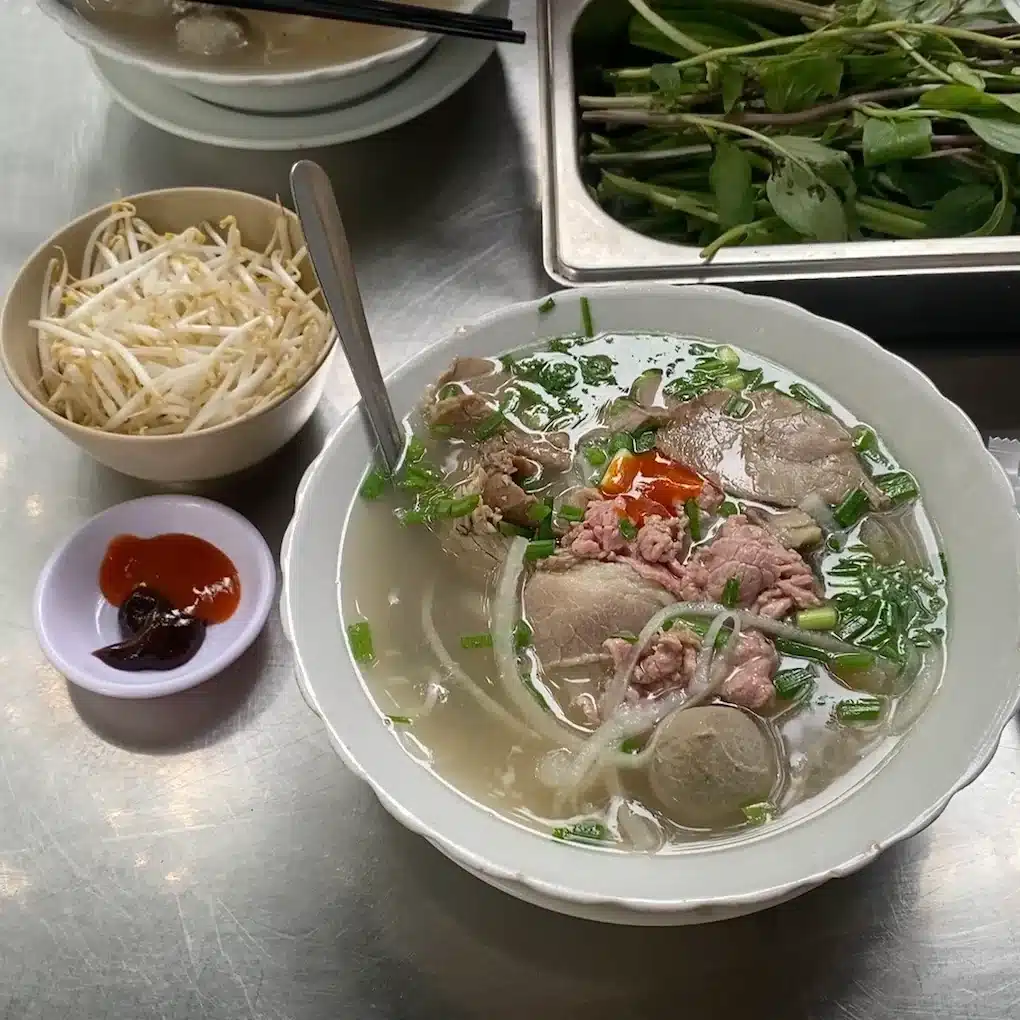
Founded in 1947 by Mr. Tran Van Phon, Pho Cao Van started as a street cart pushed through Saigon before settling on Mac Dinh Chi Street in 1960. Today, his youngest son continues the family tradition, serving a distinct northern style beef pho adapted for southern palates with fresh herbs, bean sprouts, and dark soy sauce on the side. The broth remains light and aromatic, carrying decades of history in every bowl.
How to order: a classic beef pho bowl with herbs, bean sprouts, and dark soy sauce on the side
Where: 25 Mạc Đĩnh Chi, Sài Gòn
Downside: as one of the most famous old school pho spots in the city, it draws a steady crowd, especially around lunch
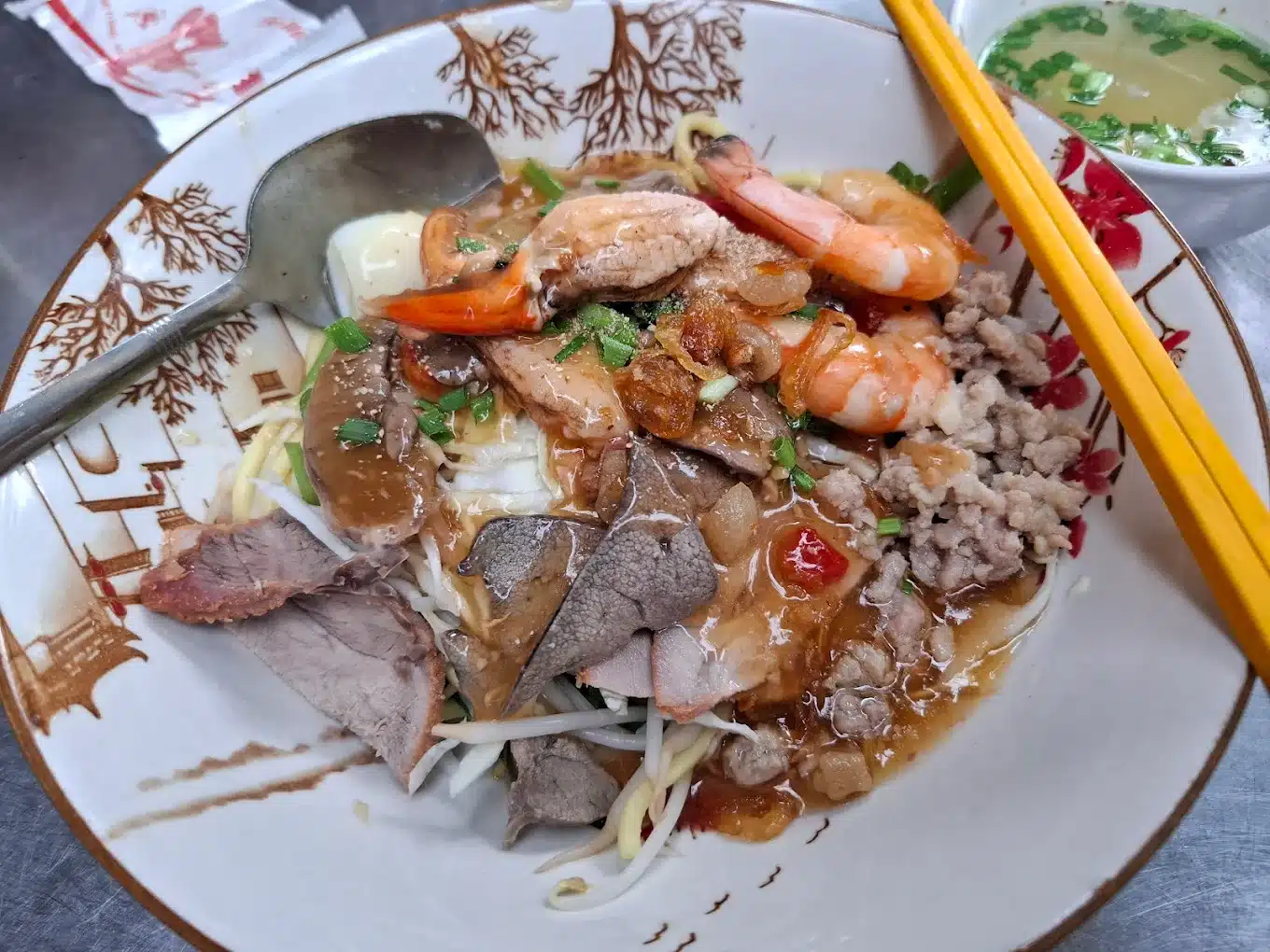
At 62 Ton That Thiep Street, Hu Tieu Thanh Xuan sits right at the mouth of a narrow alley barely two meters wide. The open kitchen and glass cabinet holding noodles, shrimp, pork, heart, and liver sit close to a row of three small tables pushed against one side of the alley to leave room to pass through. The story locals tell traces back to around 1945, when an elderly teacher named Do Van Khue came up from My Tho to Saigon and was given shelter by members of the Cha Va Pagoda nearby, a temple built for the Indian community that once lived around it. He eventually opened a hu tieu stall right beside the pagoda, and the shop has stayed in roughly the same spot ever since. The current third generation owner, Mrs. Tuoi, says the name traces back to her grandfather in law, who took his most favored son’s name, Xuan Thanh, and flipped the words around to name the shop Thanh Xuan. Nearly a century later, the shop has kept both its old fashioned signage and the original flavor of the dish intact.
How to order: the all topping version with shrimp, pork, heart, and liver
Where: 62 Tôn Thất Thiệp, Sài Gòn
Downside: seating is extremely limited given the narrow alley, so it can fill up fast during lunch
You’ll save hours of searching for the best spots to eat in Ho Chi Minh City.
Book our top-rated food walking tour on GYG now
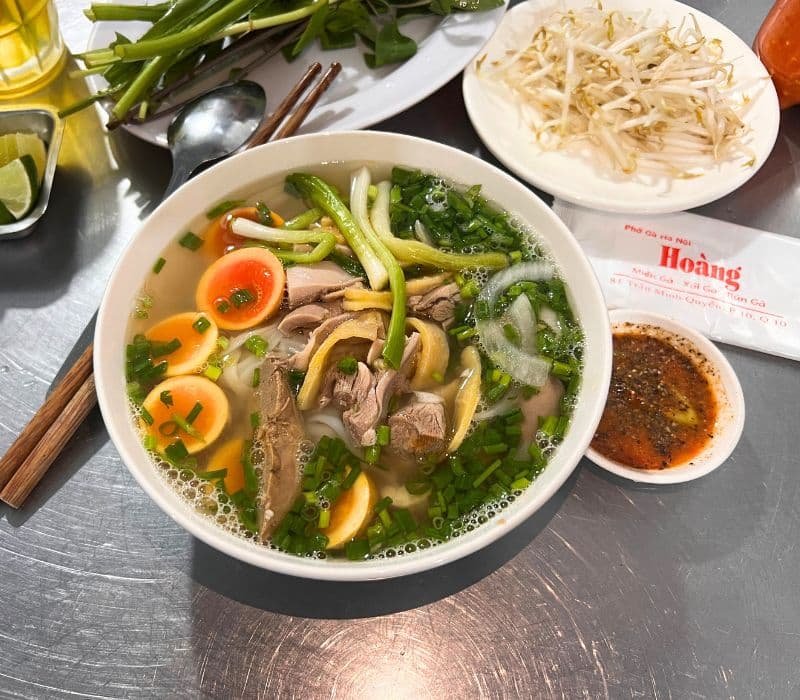
If you grew up thinking pho only comes with beef, this place will politely correct you. It is a newer spot doing proper Hanoi style chicken pho, with signage that makes the focus clear before you even sit down. The broth avoids the gamey bone smell that some chicken pho slips into, portions are generous, and the dining room stays clean and breezy even at full capacity. Regulars order the pho ga tron, which is chicken pho tossed and mixed and served with a side bowl of broth, a good option if you have only ever had the classic version. Staff get repeated praise for being attentive without hovering, and the owner reads and replies to customer reviews.
How to order: chicken pho, regular thigh meat, side bowl of broth, free iced tea
Where: 75 Hoang Sa, Saigon Ward
Downside: popular enough now that lunch can run a short wait, up to about 10 minutes
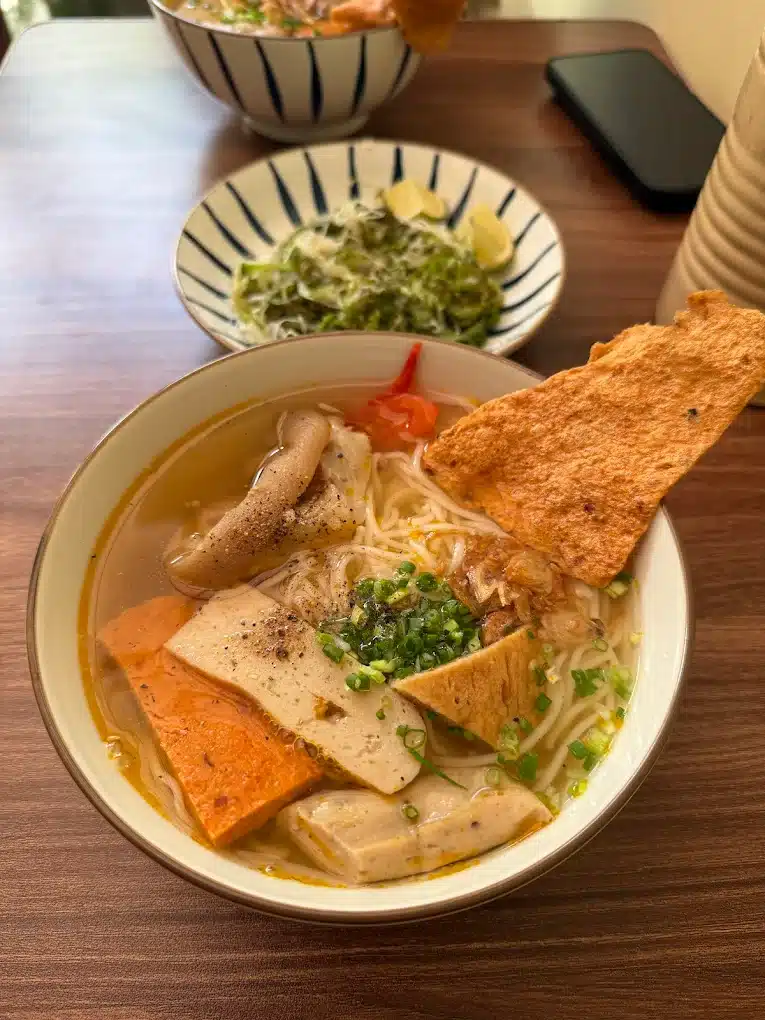
Tucked behind a leafy gate that looks more like someone’s house than a restaurant, this is the bun cha ca spot to visit for Central Vietnam flavor without leaving the city. The broth is light without being thin, and the bun bap gio, vermicelli with pork knuckle, has tender and fragrant meat that does not taste boiled to death. Portions run generous on the noodles, so smaller eaters should ask for less bun and more toppings. The spring rolls are a quiet standout too, packed with vegetables and never greasy, good enough that visitors expecting a cafe based on the look of the space have walked away raving about the food instead.
How to order: Bun Cha Ca The Buns, spring rolls on the side, less noodles for smaller appetites
Where: 29/11 Nguyễn Bỉnh Khiêm, Sài Gòn
Downside: the dining room is small and gets snug fast during peak hours
Skip the traffic stress and ride like a local. Book our motorbike food tour on Airbnb now
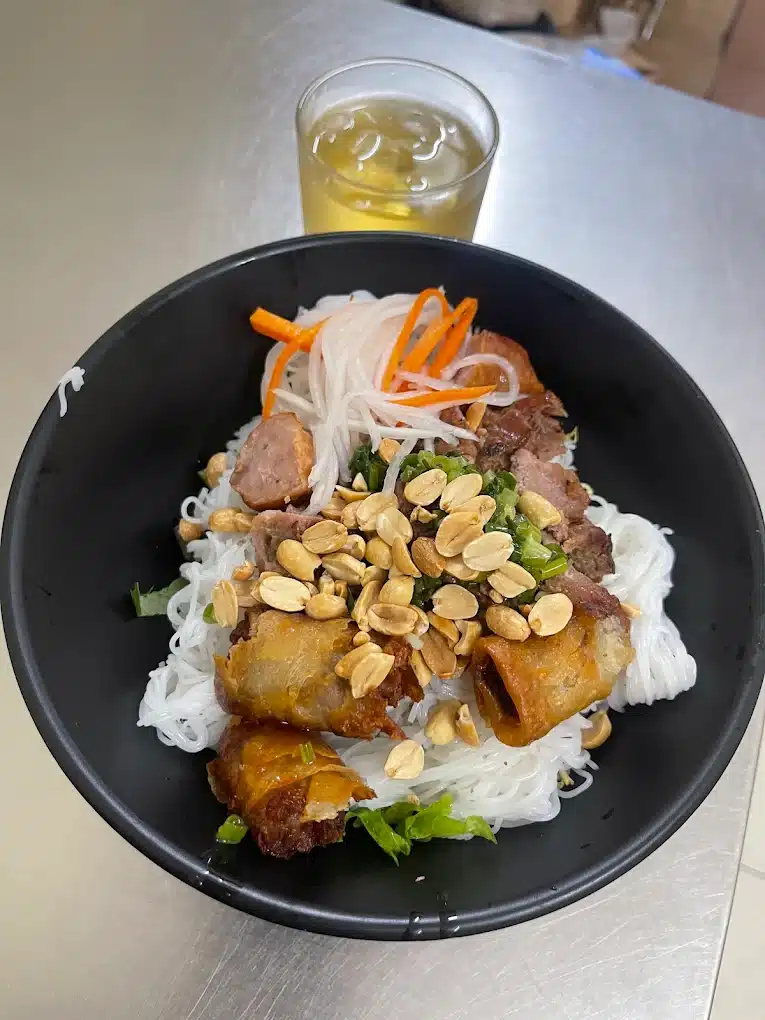
Down a quiet alley off Nguyen Thi Minh Khai, an older couple runs a small operation with no menu. You sit down and the food appears. Mornings bring bun thit nuong and banh cuon, with the offering changing in the afternoon, so it is worth asking what is available later in the day. The quality stays remarkably steady, and portions are big enough that two people can eat well for around 120,000 VND. Fish sauce and condiments sit on the table for self service, and the iced tea is free with refills offered before you even ask.
How to order: morning banh cuon, bun thit nuong is available in the afternoon
Where: 18A/52 Nguyễn Thị Minh Khai, Sài Gòn
Downside: no menu and limited English, so pointing at what a neighboring table is eating works better than ordering verbally
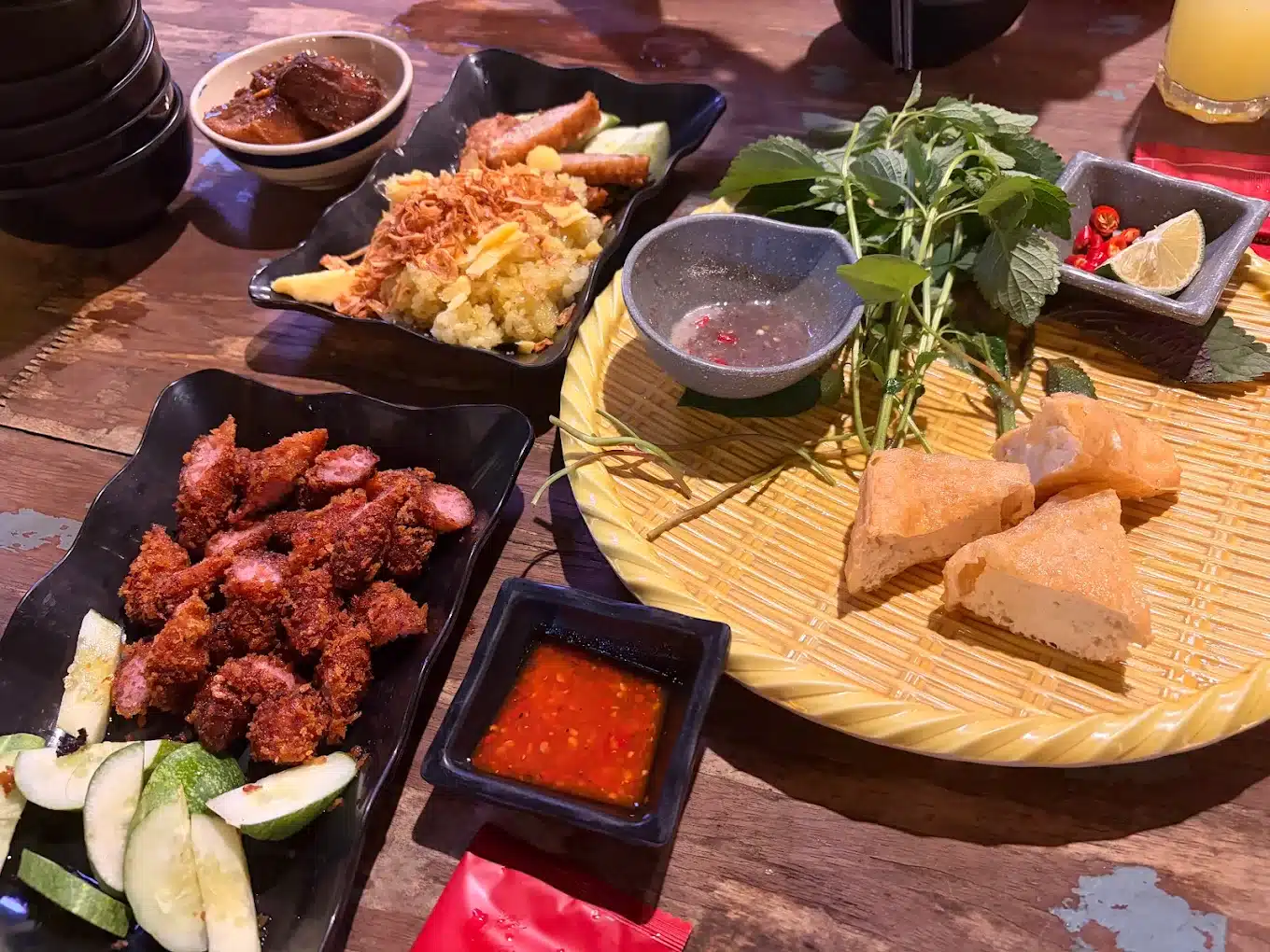
For anyone craving a complete Hanoi-style meal without booking a flight north, this spot earned a Michelin nod for good reason. The space helps too, with a woven bamboo ceiling and warm lighting that feels airy rather than cramped. I came in on a quiet Sunday without realizing the place had Michelin recognition, rated the food an honest 8 out of 10, and got comped a grilled duck dish after the kitchen ran short on an ingredient for their crab hotpot. I also tried the crab vermicelli with beef and the sticky rice with assorted toppings, both of which stood out for a flavor profile more interesting than usual. On a later visit, I ordered the crab paste hotpot, fried fermented pork rolls, com rice pork patties, garlic roasted duck, and kumquat honey tea, every dish landed
How to order: bun cha, bun rieu with cinnamon pork skewers mixed in, crab vermicelli with beef, sticky rice with assorted toppings
Where: copy and paste “béo ơi quán” on google
Downside: indoor seating runs tight for bigger groups, ask for the outdoor area for parties of six or more
Looking for something off the beaten path? Discover our super niche food walking tour on TripAdvisor. It has been awarded Best of the Best 2026 on TripAdvisor
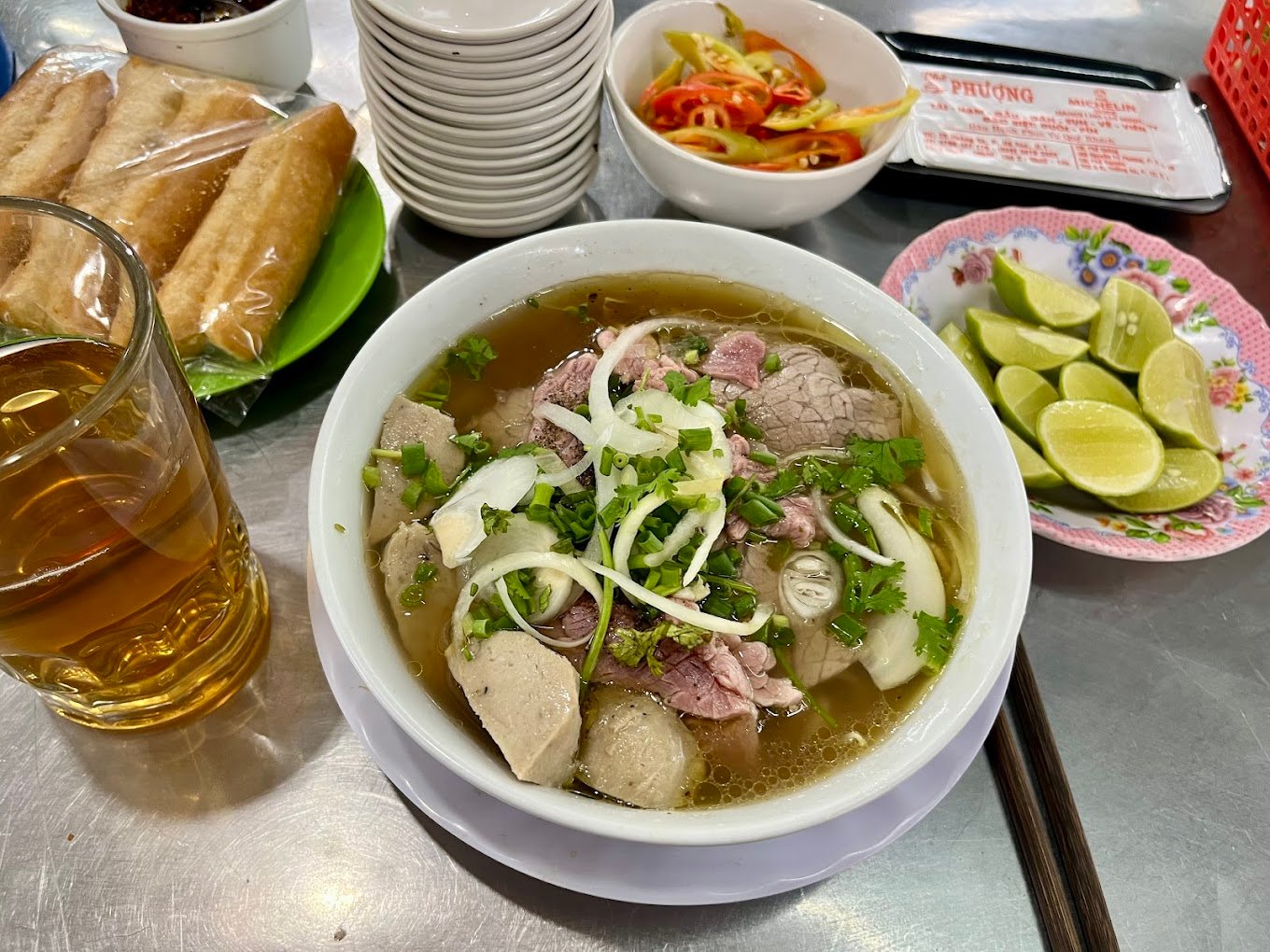
Pho Phuong’s broth recipe traces back to Nam Dinh province in northern Vietnam, brought to Saigon in the 1960s by Ms. Phuong’s mother, who opened a small pho stall to support her family and adapted the traditional Nam Dinh style broth to suit southern tastes. Ms. Phuong has been cooking pho since she was 17, and after her mother passed, she and her sister Ms. Hoang took over the business, each eventually opening their own shop, Pho Phuong and Pho Hoang. In 2023, the Michelin Guide awarded both sisters’ restaurants a Bib Gourmand recognition, one of only eight pho spots in Ho Chi Minh City honored that year. The broth is made entirely from beef bones, simmered continuously for 20 hours, using only fresh, same day butchered Vietnamese beef, never frozen or imported. The signature dish is oxtail pho, added to the menu years after the original family recipe to enrich the broth. The oxtail’s chewy, gelatinous texture made it the restaurant’s best seller, though it is labor intensive to prepare and often sells out by midday.
How to order: oxtail pho if arriving before midday since it sells out, otherwise a regular bowl with up to three toppings
Where: 25 Hoang Sa Street, Saigon Ward
Downside: oxtail pho is the priciest bowl on the menu and frequently sells out by late morning
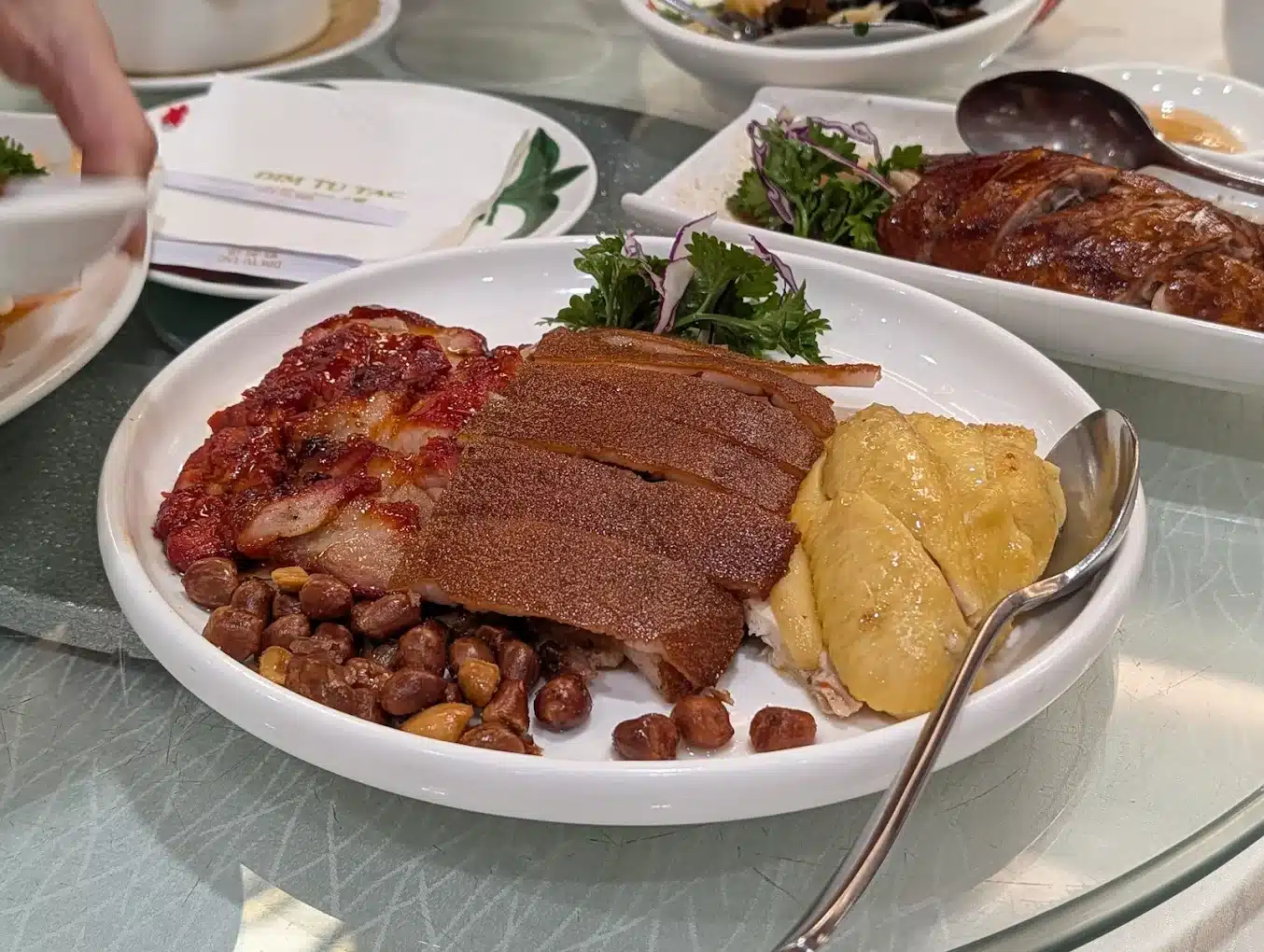
Dim Tu Tac wears its Cantonese roots right in the name and backs it up. It is nice enough for a birthday dinner and relaxed enough for a regular Tuesday. One reviewer rated the whole experience 9.5 out of 10, saying nothing on the table felt like a wasted order. Another diner singled out the fried hor fun specifically for real wok hei and a fragrant soy aroma, alongside a tender, well roasted three meat combo and king oyster mushrooms that had fully soaked up the sauce. The golden lava black bun is the dessert worth saving room for, with soft, fluffy dough and a filling that is rich without being cloying.
How to order: fried hor fun, three meat combo, king oyster mushrooms with soy sauce, golden lava black bun for dessert
Where: 55 Đông Du, Sài Gòn
Downside: parking is motorbike only at 10,000 VND per bike, and the price point sits above average for the category
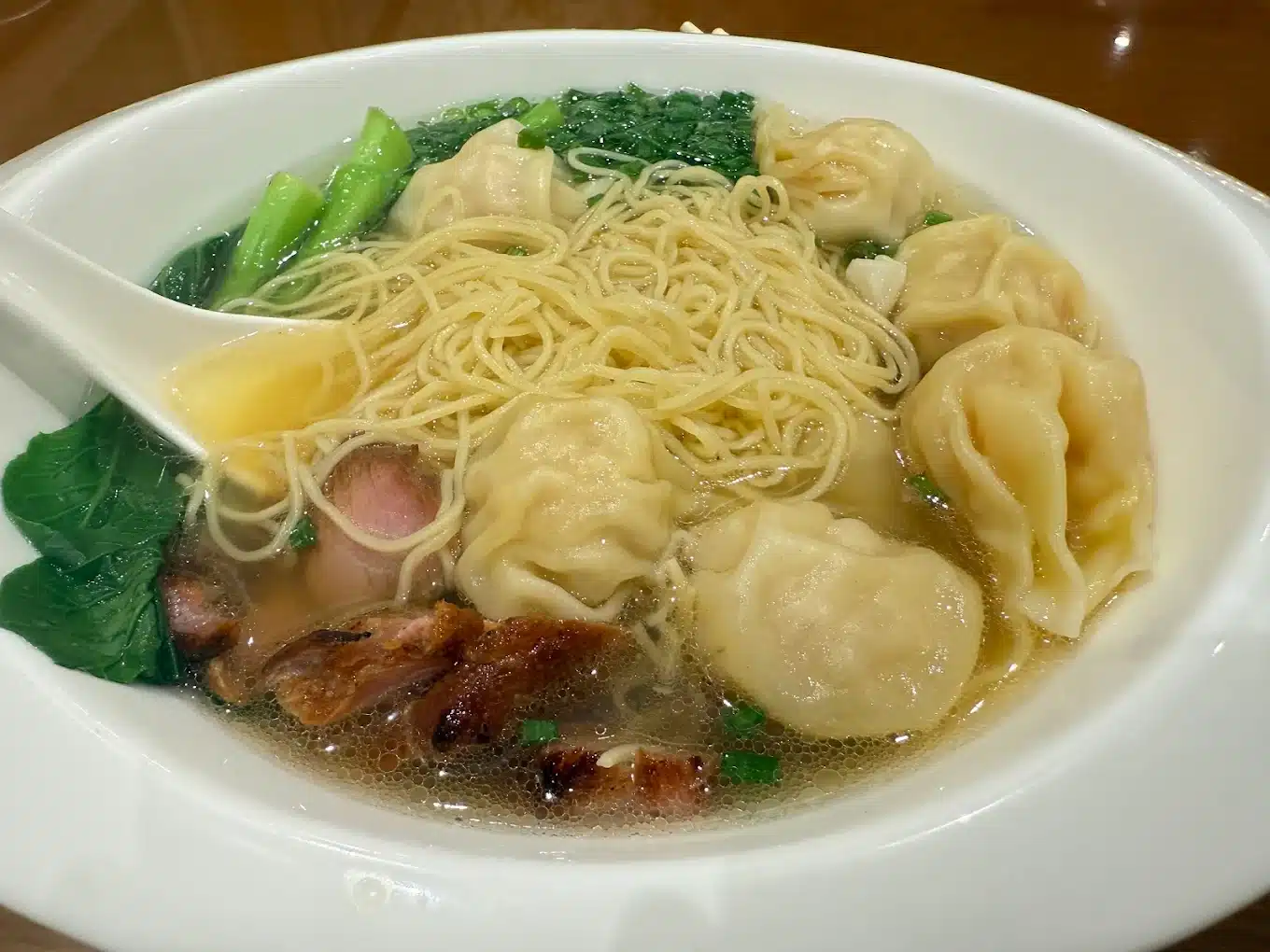
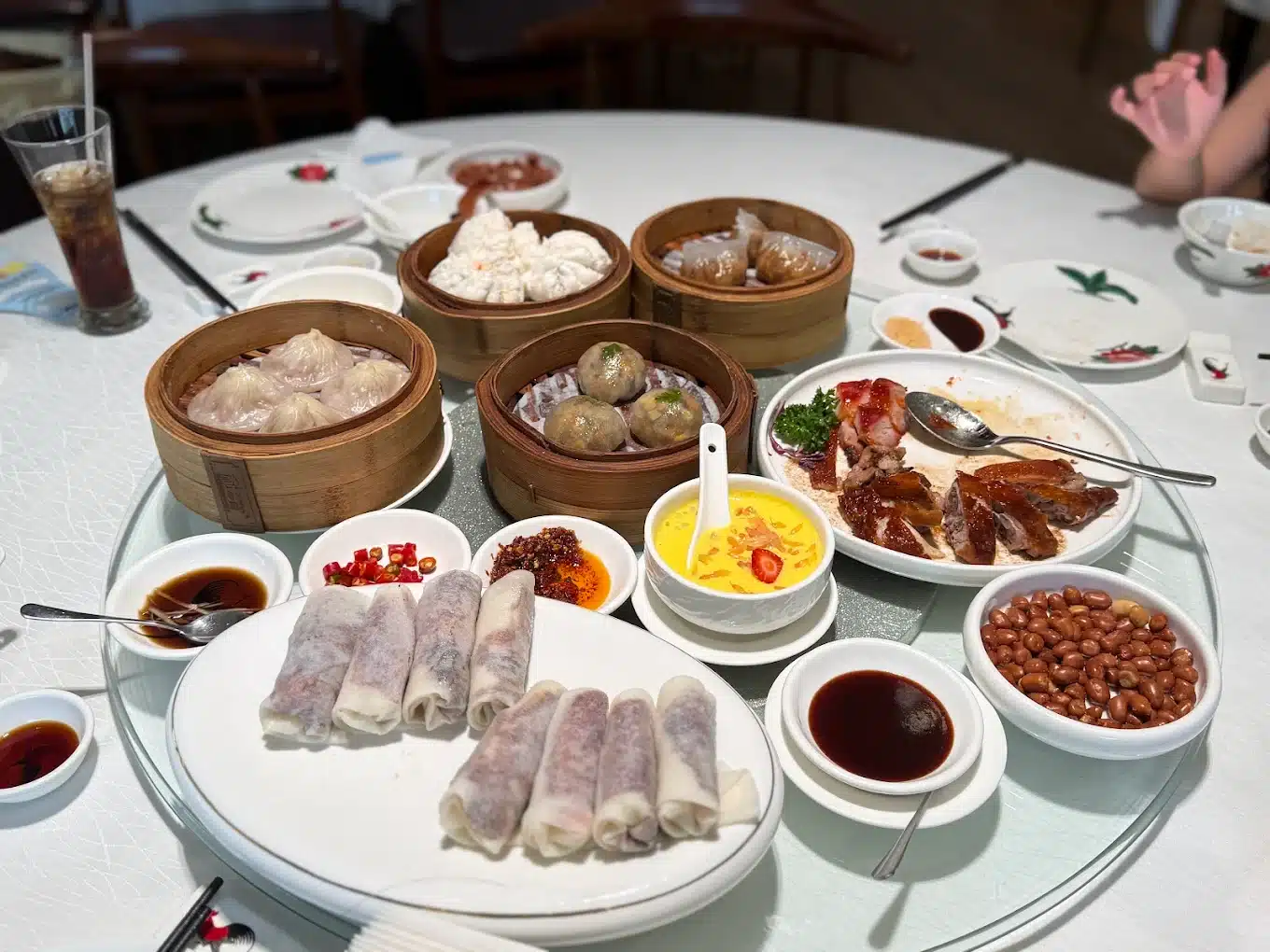
If Dim Tu Tac is the polished newcomer, this is the elder statesman, with some families eating here for over fifteen years. It sits on Dong Khoi with a live seafood tank, dark wood interiors, and warm lighting that makes the street outside feel a world away. A lifelong regular praises the dough on every dumpling and dim sum item, including scallop and shrimp dumplings, crab roe siu mai, fresh shrimp har gow, chive dumplings, garlic chili har gow, and scallop rice rolls, for being rolled thin and even enough to see the filling through it. The seafood tank gets compared to walking through a mini seafood market, where customers pick their fish and the chef advises on how to cook it to preserve the natural sweetness. The Peking duck is another highlight, with crispy, glossy skin wrapped in a thin pancake with scallion, cucumber, and hoisin.
How to order: steamed grouper with a chef recommendation based on the catch, Peking duck with pancakes, an assortment of dim sum to start
Where: 54 -56 Đồng Khởi, Sài Gòn
Downside: on the pricier side, and dim sum is served all day, so there is no need to rush over specifically in the morning
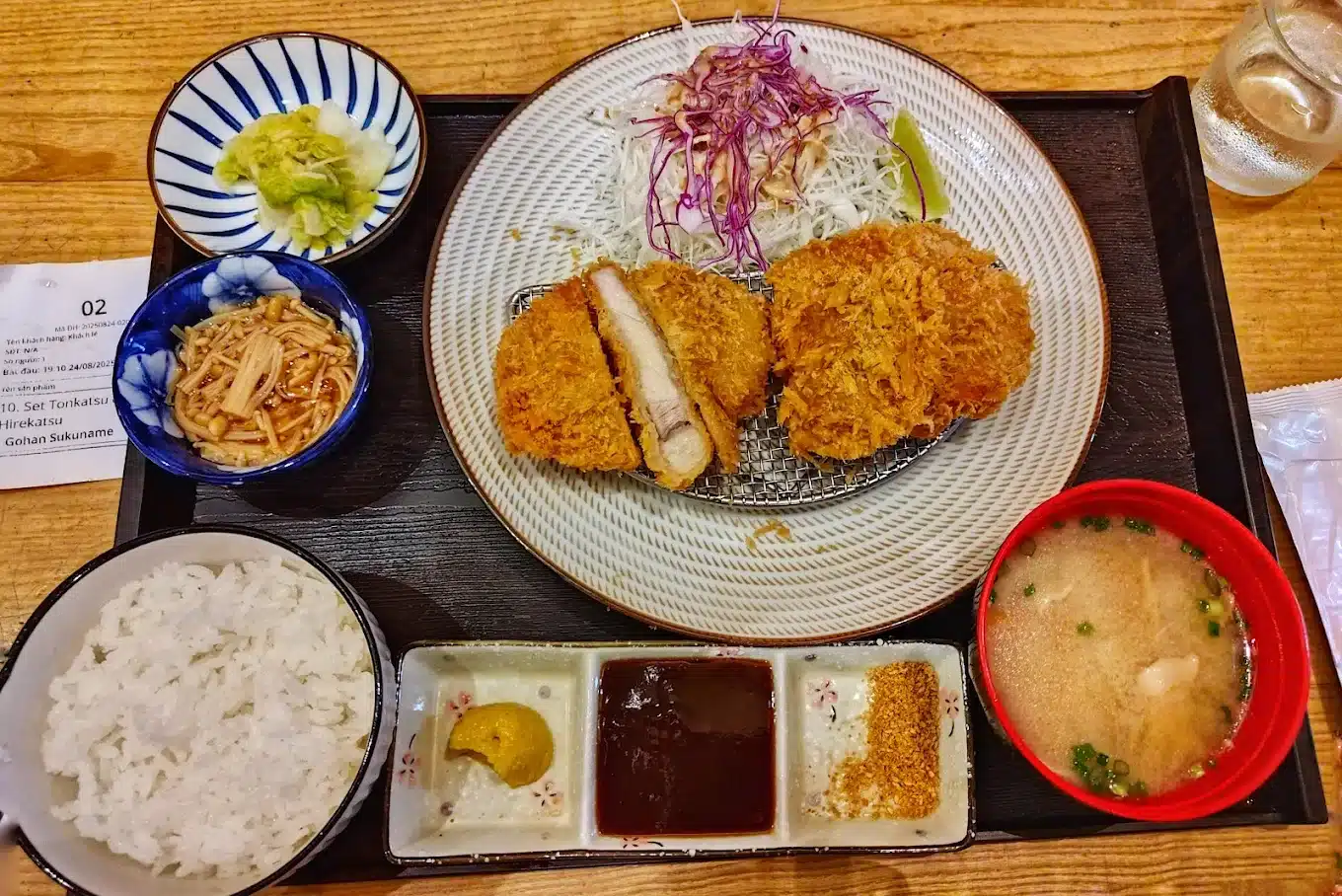
Fujiro is one of the few spots in Saigon where the tonkatsu genuinely holds up. The cutlet comes thick and juicy, never dried out, and the pork itself carries none of the off smell that cheaper versions sometimes have. Service matches the food, attentive without being slow, though that combination means lunch gets packed fast and seats fill up quickly once the midday rush hits. Beyond the classic tonkatsu, the cheese tonkatsu is a standout worth ordering on its own, and the curry holds its own too, rich without being heavy. It’s a menu worth exploring beyond just one dish, since several items here are genuinely worth trying in the same visit.
How to order: classic tonkatsu, cheese tonkatsu, curry on the side
Where: Thái Văn Lung, Sài Gòn
Downside: gets very crowded at lunch, so go early or expect to wait for a table
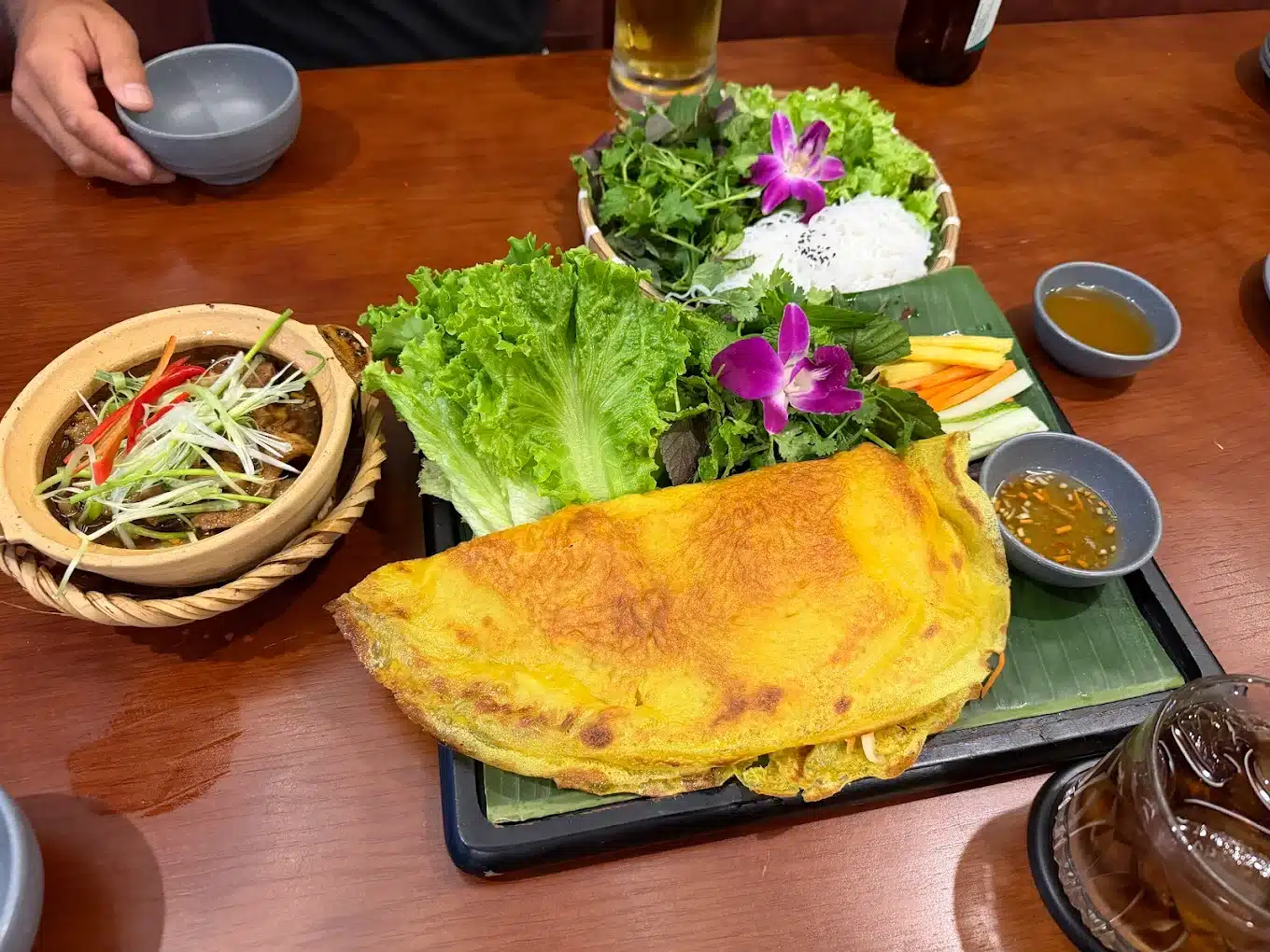
This has become the go to for travelers staying nearby who pull up Google at the last minute. Multiple recent reviewers single out staff by name for being helpful, attentive, and genuinely fun to deal with. A traveler who walked seventeen minutes from his hotel on a brutally hot day said it was worth every minute, with pho bowls served alongside fresh herbs, lettuce, and rice noodles for build your own bites on the side.
How to order: pho with the herb and lettuce side spread, bun dishes for build your own bites
Where: 13/1 Lê Thánh Tôn, Bến Nghé, Quận 1
Downside: draws a mixed crowd of locals and tourists, so prices run a bit higher than a true hole in the wall
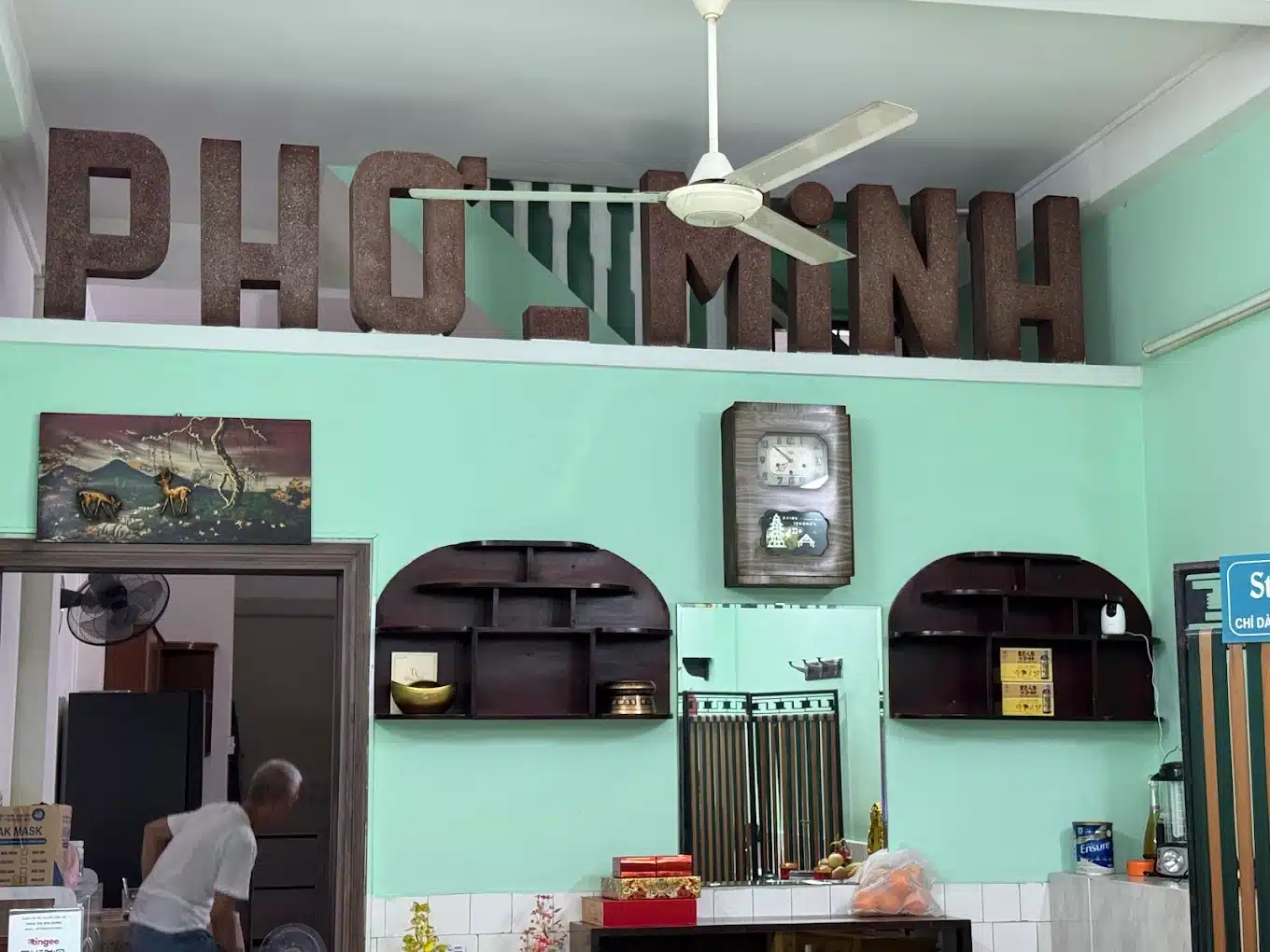
Tucked down a quiet, nondescript alley, this is the kind of spot that feels like it should be a secret, except everyone already knows about it. The shop has been run by the same family for decades, with one regular dating his visits back to 1990 and the place itself to 1945. A reviewer who has been coming for over ten years describes the broth as clear with a more delicate, clean taste than most, and says the kitchen never stints on the beef.
How to order: medium bowl of pho with tendon and beef
Where: 63/6 Pasteur, Sài Gòn
Downside: limited operating hours mean it can get busy fast
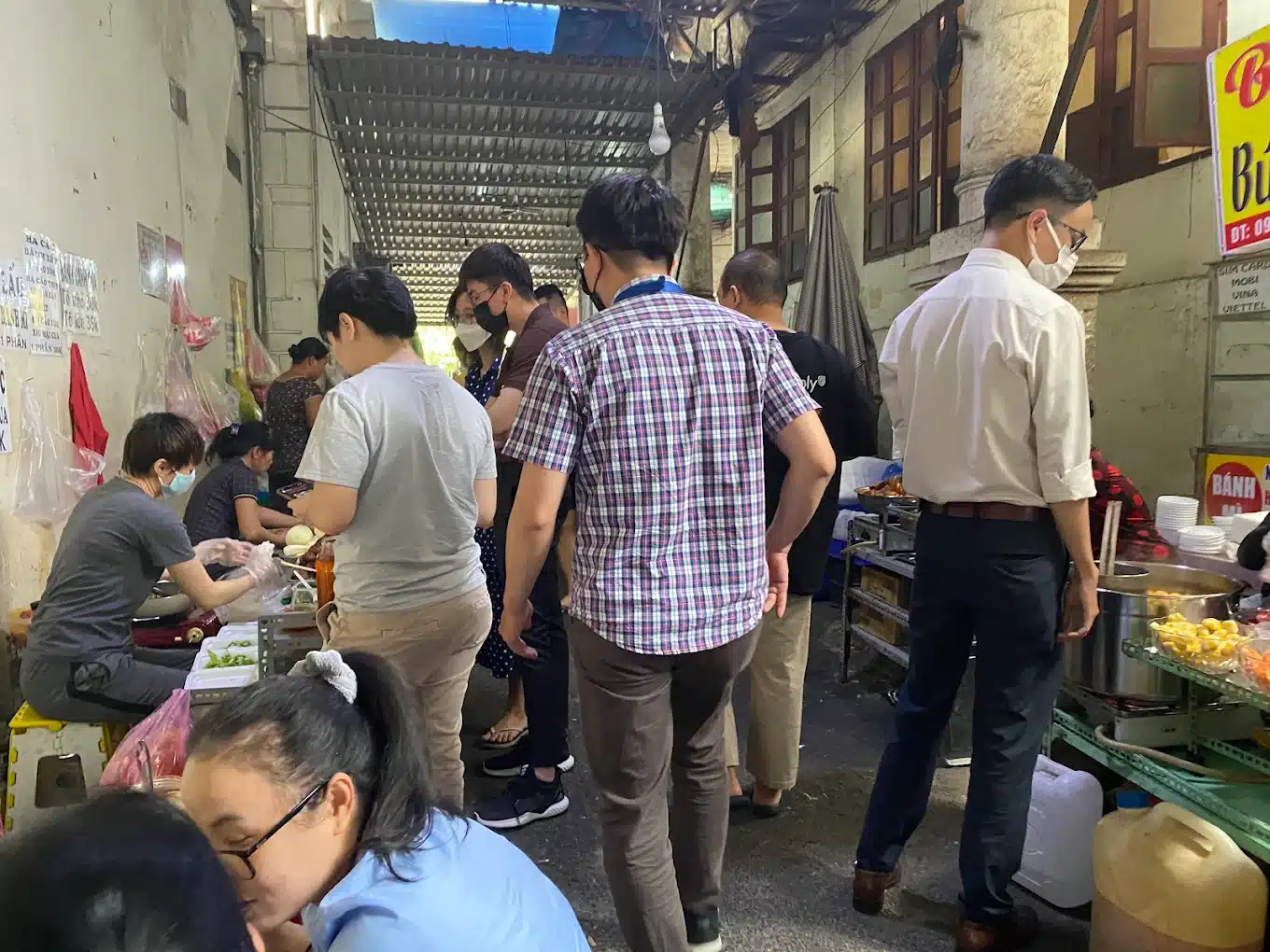
Known among locals as the cheapest street food alley in what used to be District 1, this narrow passage runs only about 3 meters wide and 20 meters long, squeezed between modern high rises. Nearly 20 food stalls line up side by side here, selling everything from grilled meat over rice and crab noodle soup to Thai style vermicelli, crab soup, banh mi, pork organ stew, snails, che, and fresh spring rolls. The alley gets busiest between 2 PM and 6 PM, packed with students, office workers, and visitors from both inside and outside the country looking for something cheap and fast.
How to order: walk the alley and pick whichever stall has the longest line of regulars
Where: 76 Hai Ba Trung Street, Saigon Ward
Downside: seating is informal and tight, and the alley gets genuinely crowded during peak afternoon hou
Chicken rice is a familiar dish in central Vietnam (like Nha Trang, Phu Yen, Đa Nang, Quang Nam). But in Saigon, it’s usually done Chinese-style. This place serves real Singapore-style chicken rice. A portion costs 50–70k if you go for the whole leg. The chicken is juicy, not dry. The soy sauce isn’t too salty. Personally, I love Hainanese chicken rice and often eat it at hawker stalls in Singapore. This is the only spot in Saigon that gets about 80–90% close to the original. Most other shops that say “Singapore chicken rice” change the flavor to suit locals, so I don’t rate them highly. This one has seating, is located in a one-way street in District 4, and is really popular with office workers at lunchtime.
If you’re specifically craving Singapore chicken rice, I highly recommend this one.
None of these are the cheapest options in their categories, and a few will make you work to find the door. But that is sort of the point. Every one of these places has built a reputation the slow way, one bowl at a time, some of them run by the same family for nearly a century, and all of them genuinely caring whether you leave full and happy. With only time for three stops in Saigon Ward, Pho Cao Van, Hu Tieu Thanh Xuan, and the oxtail pho at Pho Phuong are a solid starting point, though honestly there is no wrong place to begin on this list.